Blog/Note
Fixed cameras vs aisle robots: two ways to see the shelf
Autonomous shelf robots and fixed IoT cameras both chase on-shelf truth. They solve different constraints. Here is how to read the 2026 wave without picking a religion.
September 24, 2026
Retail has spent a decade trying to answer a simple question: what is actually on the shelf right now? Inventory systems often say "in stock" while the facing is empty. That gap is on-shelf availability (OSA), and it still burns sales, labor, and shopper trust.
In January 2026, Simbe launched Tally 4.0, the latest generation of its aisle-scanning robot. The company points to longer runtime (up to about 12 hours), sharper vision, wider 3D and 360° coverage, and stronger edge AI, with customer availability aimed at mid-2026. Later in the year, coverage of large rollouts (including milestones across major grocery networks) kept robots in the industry headlines.
Robots are one answer. Fixed cameras are another. Neither owns the whole problem.
What robots are built for
An autonomous shelf robot rolls the aisle on a cadence. One unit can cover a lot of fixtures in a store. Close-range cameras help with labels, depth, and hard-to-see fixtures. For many large formats, that is a strong fit: full-store passes without wiring a camera to every bay.
The tradeoffs are operational. Battery and charging shape how often you get a fresh pass. Crowded peak hours can slow or pause mobility. Cadence is often measured in passes per day, not continuous snapshots of a single bay. Robots scale per store more than per shelf, which is why chains chasing broad coverage often start here.
What fixed cameras are built for
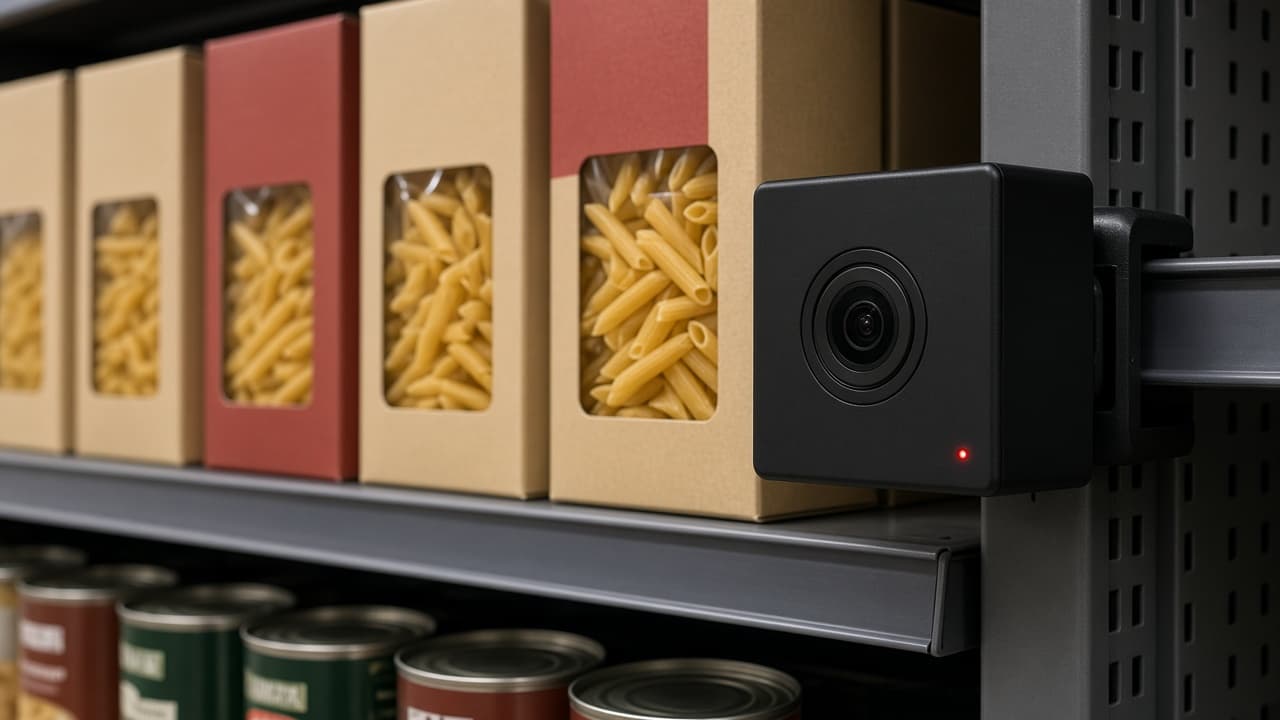
Fixed shelf or bay cameras stay put. Once mounted, they can photograph the same gondola many times a day without an associate walking the aisle and without waiting for a robot to finish a loop. Power and connectivity are usually continuous. That makes them a natural fit when you need frequent truth on specific categories, high-velocity facings, or routes where a distributor or store manager already thinks in "this bay, this SKU."
The tradeoffs sit on the other side of the ledger. Dense coverage means more devices, mounts, and image volume as shelf count grows. Sightlines matter: angle, occlusion, and depth still decide whether a facing reads correctly. Fixed cameras are often strongest in targeted zones or as always-on infrastructure on key aisles, not as a one-device answer for every fixture in a hypermarket.
Industry guides that compare capture methods (robots, fixed cameras, handhelds, and hybrids) keep landing on the same conclusion: the "best" method depends on store format, how fresh the data must be, and how much operational burden the store can carry.
How to choose without a pitch deck
Ask four practical questions:
1. Cadence. Do you need a full-store audit once or twice a day, or frequent photos of the same bay so someone can restock before the next shopper wave? 2. Scope. Are you digitizing every aisle, or closing the gap on the categories that drive the most lost sales? 3. Labor and pathing. Can the store host a mobile unit through the day, or do you prefer hardware that stays on the fixture? 4. Decision owner. Who acts on the signal: store associate, category manager, or an outside distributor who used to send a person to take orders?
Robots tend to win when the job is broad, scheduled store intelligence. Fixed cameras tend to win when the job is persistent visibility on the bays that matter, especially when the workflow is "look at this shelf and decide what is low." Many retailers will end up with both: robots for wide passes, fixed sensors where minute-level or high-frequency awareness pays for itself.
Why this matters for OSA
OSA is not a dashboard metric in isolation. It is the moment a shopper reaches for a facing and finds cardboard or empty metal. Closing that gap needs ground truth at the shelf, not only warehouse counts. Robots and fixed cameras are different instruments for the same physical fact.
The 2026 robot news cycle is useful because it forces the industry to talk about capture method again. The useful response is not "robots good, cameras bad" or the reverse. It is matching the instrument to the store's format, cadence, and who needs the photo of the gondola.
Sources
Simbe, "Simbe Unveils Tally 4.0..." (12 Jan 2026): https://www.simberobotics.com/about/newsroom/simbe-unveils-tally-4-0-the-next-generation-of-autonomous-retail-robot-powering-store-intelligence-via-physical-ai
Simbe insight, "All Eyes on Inventory: Fixed vs. Mobile Cameras in Retail": https://www.simberobotics.com/resources/insights/all-eyes-on-inventory-fixed-vs-mobile-cameras-in-retail
Scandit guide, "How to choose the best retail data capture methods for shelf intelligence": https://www.scandit.com/resources/guides/choosing-best-retail-data-capture-methods-shelf-intelligence/
Want this in your stores? Request a pilot.