Blog/Note
When the weekly visitor is a shelf photo
Distributors and CPG teams are swapping clipboard aisle walks for gondola photos. How image recognition and DSD proof change store visits.
October 3, 2026
For a long time, the truth about a gondola arrived on foot. A distributor, broker, or CPG field rep walked the aisle once a week, counted facings with a clipboard or a phone survey, argued politely about voids, and left with an order pad that mixed real gaps with guesswork. Headquarters waited for the write-up. By then the shelf had already changed.
That ritual is not disappearing overnight. But in 2025 and 2026 the visit is being rewritten around a simpler artifact: a photograph of the shelf itself.
Why the clipboard stopped scaling
Manual shelf audits were always slow and subjective. Two reps can score the same bay differently. Rushing the form to finish the call has been an open secret for years. FORM’s April 2026 overview of CPG image recognition puts the pain bluntly: headquarters needs a fast, validated view across thousands of doors, while field teams cannot document every facing without giving up selling time. Lagged sales data tells you what moved through the till. It does not tell you whether the promotional pack was on the shelf when the shopper arrived.
Trade spend makes the gap expensive. Brands pay for placement and displays that may never appear as contracted. Retailers and suppliers then argue from different memories of the same aisle.
Photos as evidence, not souvenirs
Retail image recognition turns a shelf photo into structured data: which SKUs are present, which facings are missing, whether the realogram matches the planogram, and whether a void sits on a high-velocity item. FORM describes the 2026 shift as moving past logo counting toward SKU-level detection, void flags, automated planogram scoring, and closed-loop tasks that ask the rep to fix the issue before leaving the store.
That matters for distributors as much as for brand teams. An order written from a Monday walk without a visual record is hard to defend on Thursday. A geotagged photo of an empty facing, or of a competitor sitting in a paid slot, changes the conversation from “I think it was out” to “here is what the gondola showed.”
DSD and vendor accountability
Direct-store-delivery categories make the evidence problem sharper. Balls Foods’ Price Chopper proof-of-technology work with Simbe is a retailer-side example of the same idea. DSD products represented a large share of store sales, yet missing items often left teams without documentation for vendor follow-up. Daily shelf intelligence and clear visual proof shifted those talks from observation and debate toward performance management with pictures attached.
You do not need a robot in every aisle for the lesson to hold. The operating principle is the same: shelf condition becomes a shared record instead of a contested anecdote.
Planograms at convenience-store scale
A December 2025 open-access paper in *Scientific Reports* describes a real-time planogram system built for deployment across more than 7,000 7-Eleven stores in Taiwan. Store staff capture one or more shelf images; models detect rows and products; a virtual-shelf step stitches partial views from tight aisles; alignment against the digital planogram flags correct items, wrong positions, and out-of-stocks. The research framing is clear: manual audits do not scale cleanly when assortments churn and aisles are too narrow for a single perfect shot.
That is not a MeshRuby product claim. It is evidence that large retail networks are treating the shelf image as an operational input, not a marketing still.
Fixed cameras and the days between visits
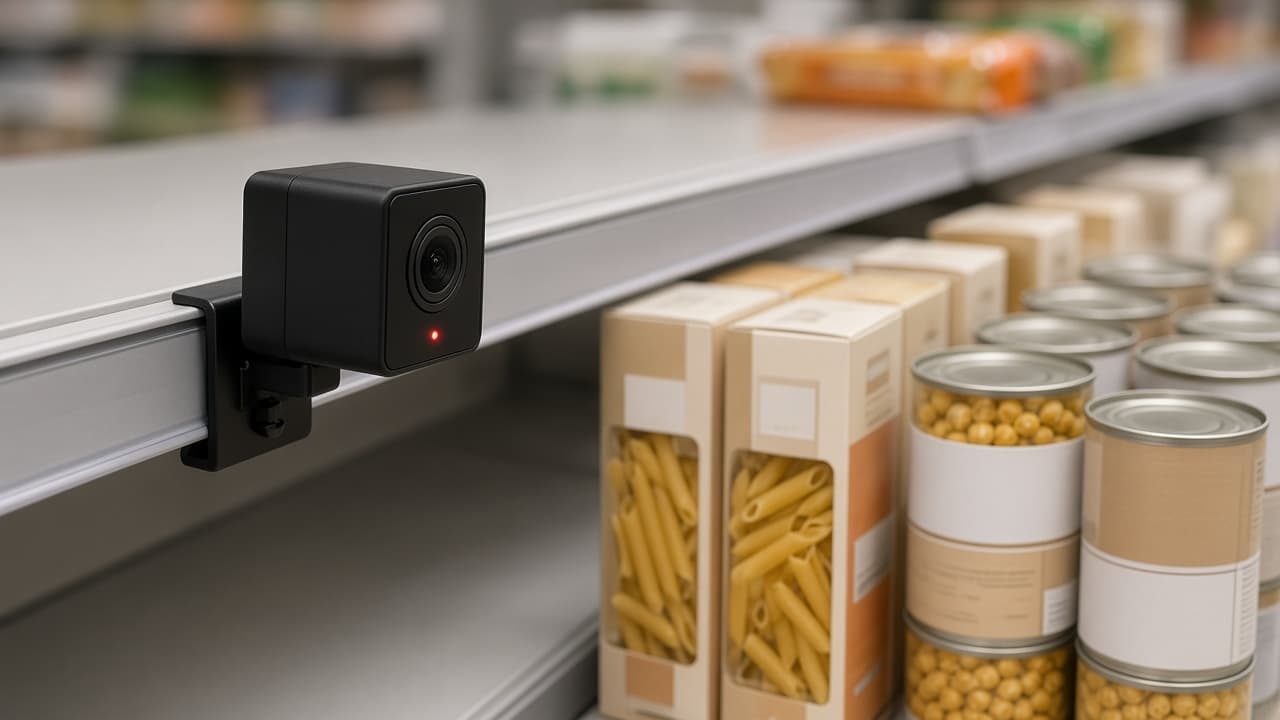
Phone capture still depends on someone showing up. Between weekly calls, facings empty and resets drift. That is why fixed shelf cameras show up beside field image recognition: a standing camera aimed at the goods—not aisle traffic—can refresh the picture between human visits.
MeshRuby’s MR.Optic story sits in that narrow lane: shelf-mounted cameras that photograph products several times a day so inventory talks start from facings, not memory. The quieter point for regional routes is simple. If the weekly visitor is becoming a photo, treat the gondola as evidence—whether the lens is in a pocket or clipped to the bay—then act before the next shopper arrives.
Want this in your stores? Request a pilot.