Blog/Note
The Week After the Reset: Why Planograms Drift and How to Check Reset Compliance
Why shelves drift off plan in the days after a remodel or category reset, what research says about it, and how retailers and CPG teams check reset compliance.
November 23, 2026
The Week After the Reset: Why Planograms Drift and How to Check Reset Compliance
Reset night gets all the attention. A crew strips the section, moves the shelves, puts up new labels, restocks to the new plan and signs off. On the morning after, the shelf is as close to the planogram as it will ever be. What happens over the next seven days decides whether the new layout delivers what the category team planned.
Reset season never really ends
Walmart said in April 2026 that it plans to remodel about 650 supercenters and Neighborhood Markets this year, roughly the same number as last year, according to Supermarket News. At its October investor day, Kroger said its refreshed store formats give more room to fresh, meal solutions and private label and less to general merchandise and apparel, Grocery Dive reported. Every change like that means many planogram resets at once.
Below the remodels sits the routine calendar: category reviews once or twice a year, new item cut-ins and seasonal swaps. SAS Retail Services described in July 2026 how the October reset calendar lands on grocers mostly overnight and across many locations at once, just as holiday preparation peaks. In a sponsored C-Store Dive article, the merchandising firm MSCO cited convenience operators reporting more than 60 percent staff turnover in the first half of the year as a reason to hand resets to outside crews.
Why shelves drift after a reset
Once the crew leaves, normal store operations take over, and several small habits pull the shelf off plan:
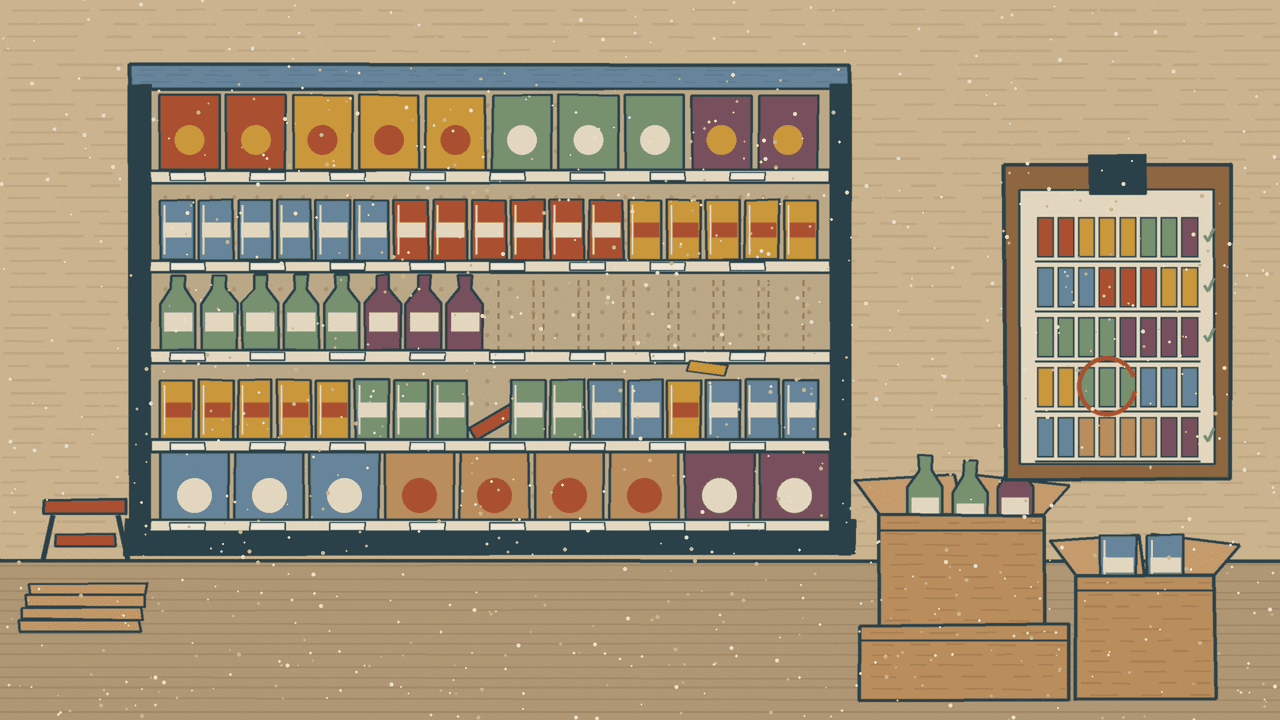
New items that did not arrive. The labelled space sits empty, so someone widens the neighbouring product to fill it. ShelfPlot's reset checklist advises leaving the gap labelled and recording the missing item, because filling it hides the problem. Old-plan stock. Discontinued items get parked on another shelf "for now", and backstock from before the reset goes back where it used to live. The wrong version. Vision Group notes that planogram updates do not always reach the store before the reset, so a crew can execute an out-of-date plan perfectly. Holes and borrowed product. ShelfOptix lists five recurring events behind post-reset drift: restock drift, hole-covering, promotional borrow, delist and data lag, and tag lag. People relearning the aisle. A working paper by Xu, Bollinger, Ursu and Fitzsimons combined household sales data with in-store eye tracking around an aisle reset. After product locations changed, shoppers searched longer, were more likely to buy products they had not bought before, and were less likely to buy the products they used to buy often. Associates who restock from memory face the same problem.
The research is not new, but it points the same way. In shelf experiments at Dominick's Finer Foods in Chicago, Drèze, Hoch and Purk had auditors check planogram integrity every two weeks and reported that when problems occurred, they happened early on after the reset. A California Management Review study by Raman, DeHoratius and Ton found that 16 percent of items customers asked associates to find at one chain were in the store but not on the sales floor, and that across 242 stores the share of products in the store but off the floor ranged from 0.2 percent to 10 percent.
How retailers and CPG teams check reset compliance
Most reset programmes combine a few checks:
Photos before and after. ShelfPlot's nine-step reset sequence starts with a photo of the old fixture and ends with a photo and sign-off of the new one. A position-by-position check within 48 hours, while the crew still remembers the night, followed by a four-week review of sales, out-of-stocks and gaps by product. Completion and quality measured separately. Umbrex's category reset playbook puts it bluntly: "Completion is binary. Quality is commercial." A store can report a reset as complete while products are misplaced, signage is missing or old inventory is still on the floor. Scores by SKU and position rather than one blended store number. Merchlogix suggests tracking placement, facings, sequence, presence and wrong-SKU rates separately. How long the shelf holds. Vision Group points out that a shelf that holds for two weeks is a different story from one that drifts back within 48 hours of a reset.
For suppliers, the most important use of a compliance read is deciding whether a new plan worked. Umbrex notes that a reset cannot be evaluated accurately if the retailer does not know whether it was actually implemented. Before blaming the plan, check whether the shelf changed in every store.
A first-week routine
Day 0: photograph each fixture before and after, and list missing items. Days 1 to 2: check the plan position by position and fix errors. Days 3 to 5: look for empty labelled slots that have been filled with something else, and make sure deliveries of new items go to their new home. Day 7: recheck top sellers, new items and promotional ends. Week 4: compare sales, gaps and out-of-stocks against the plan and feed the lessons into the next version.
At MeshRuby, we are building MR.Optic: fixed shelf cameras that photograph the shelf several times a day, so the store manager or distributor can see what is low without a visit. If you run stores or distribution in Oman or the wider Gulf, get in touch at meshruby.net.
Sources Supermarket News, Walmart plans 20 new stores, 650 remodels (17 April 2026): https://www.supermarketnews.com/new-stores/walmart-plans-20-new-stores-650-remodels Grocery Dive, Kroger unveils 3 refreshed store formats (21 October 2026): https://www.grocerydive.com/news/kroger-investor-day-new-store-formats-fleet-expansion/833563/ SAS Retail Services, Comprehensive Grocery Remodels & Q4 Store Resets: Closing the Labor Gap (30 July 2026): https://www.sasrlink.com/grocery-remodel-reset-labor-gap/ C-Store Dive (sponsored by MSCO), Reset faster without more staff to maximize sales during the "100 days of summer" (13 July 2026): https://www.cstoredive.com/spons/reset-faster-without-more-staff-to-maximize-sales-during-the-100-days-of-s/824555/ ShelfPlot, Planogram Reset: 9-Step Checklist to Avoid Costly Mistakes: https://shelfplot.com/blog/planogram-reset Vision Group, Planogram Compliance Explained: How Retailers and CPG Brands Actually Measure It (17 March 2026): https://visiongroupretail.com/blog/planogram-compliance-how-to-measure-it-and-improve-shelf-execution ShelfOptix, Reset Decay: What Happens to Your Planogram After the Crew Leaves (10 August 2026): https://shelfoptix.com/blog/planogram-reset-decay.htm Xu, Bollinger, Ursu and Fitzsimons, The Impact of Product Location Changes on Habits, Search, and Purchase Decisions (SSRN working paper): https://papers.ssrn.com/sol3/papers.cfm?abstract_id=4352266 Drèze, Hoch and Purk, Shelf Management and Space Elasticity (University of Pennsylvania repository): https://repository.upenn.edu/server/api/core/bitstreams/7d6bc6f6-744d-4d5c-97eb-3b247027b71f/content Raman, DeHoratius and Ton, Execution: The Missing Link in Retail Operations, California Management Review (2001): https://cmr.berkeley.edu/2001/05/43-3-execution-the-missing-link-in-retail-operations/ (PDF: https://www.hbs.edu/faculty/Shared%20Documents/conferences/2014-strategy-research/Execution%20-%20The%20Missing%20Link%20in%20Retail%20Operations.pdf) Umbrex, Category Resets and Space-to-Sales Alignment: https://umbrex.com/resources/retail-industry-playbooks/merchandising-calendar-line-review-playbook/category-resets-and-space-to-sales-alignment/ Merchlogix, 2026 Planogram Compliance Guide: KPIs, Software & Rollout: https://merchlogix.com/complete-planogram-compliance-playbook/
Want this in your stores? Request a pilot.