Blog/Note
RFID vs Shelf Photos: Why Apparel Counts Tags and Grocery Still Looks at the Shelf
RFID or shelf photos? Why apparel tags every item, why packaged grocery mostly still relies on images, where fresh RFID pilots are heading, and what each one can see.
November 9, 2026
RFID vs Shelf Photos: Why Apparel Counts Tags and Grocery Still Looks at the Shelf
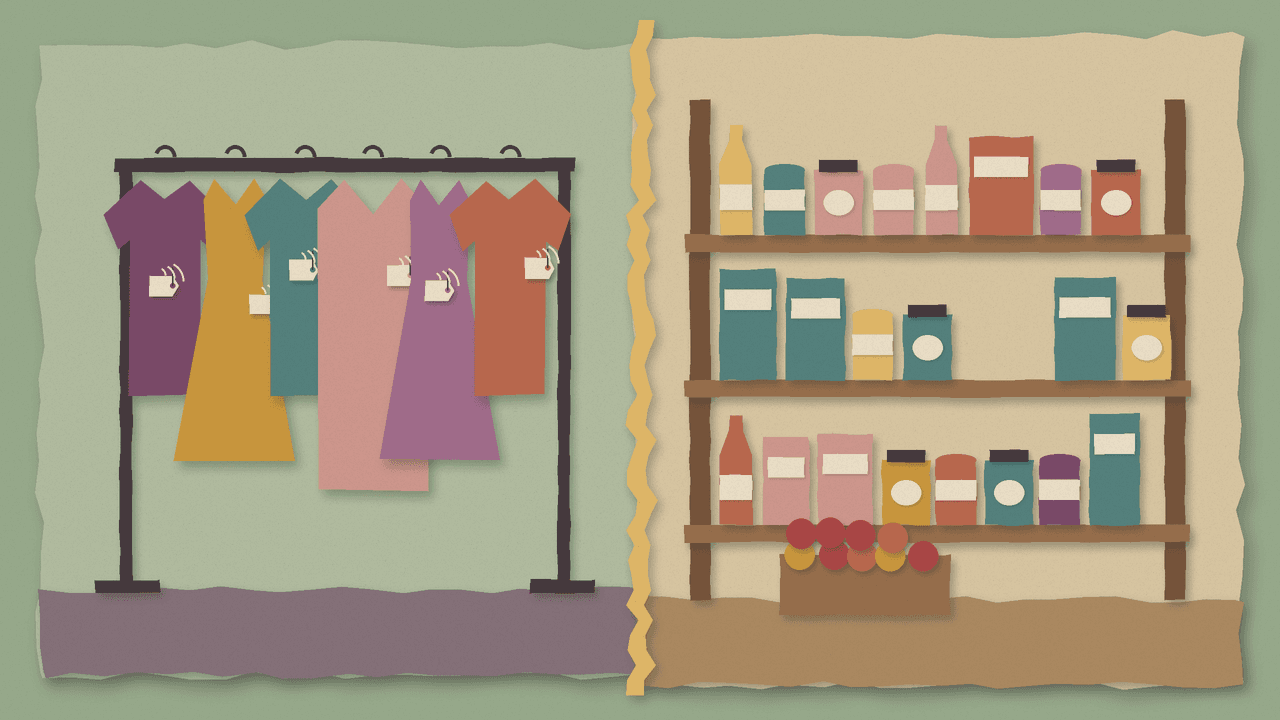
Walk into a large apparel store and a growing share of the clothes carry a small radio tag stitched into the label or hidden in the price ticket. Walk into the grocery aisle of the same retailer and almost nothing does. That gap is not an accident. It says a lot about what each technology is good at, and why shelf photos remain the practical tool for most packaged goods.
Here is how RFID and shelf images compare for item visibility in 2026, and why the answer depends on what you sell.
Why apparel went first
Clothing is the textbook RFID case. A single style comes in many sizes and colours, items are stacked, folded, and hung on crowded racks, and shoppers move things around constantly. Counting that by eye or with a barcode gun is slow.
Walmart U.S. president and CEO John Furner described the moment it became obvious at the Auburn University RFID Lab's 2025 conference. Engineers were asked to scan everything in one Supercenter's apparel department and report where each item was. "Two and a half days in, they gave up," he said, adding, "With RFID you can do an entire department in ... minutes." Walmart launched RFID at scale in apparel in 2021, according to the same Auburn recap.
The supplier mandate followed. Impinj, which makes RFID chips, says Walmart's requirement began with apparel in 2020 and expanded in 2022 to home goods, electronics, toys, and other categories. Market researcher IDTechEx estimates retail apparel alone would need over 31 billion RFID tags in 2025, and still says RFID covers only about 40 percent of the addressable apparel market.
Why grocery is different
Grocery has three problems apparel mostly does not.
The first is physics. Impinj lists the products that are hard to read: liquids such as beverages and cleaning products absorb radio energy, metal cans and foil packaging reflect it, and small items leave little room for a tag. That describes a large part of a typical grocery shelf.
The second is cost per item. RFID News reported in September 2026 that passive UHF tags cost roughly 4 to 8 US cents each at moderate volume, nearer 3 cents above 10 million units. That is small next to a shirt price, but the same article notes that item-level tagging in grocery and fast-moving goods only works when tags cost less than a few cents each.
The third is the lack of a packaged-grocery mandate. A supplier guide from tag maker Createlink, updated in October 2026, says grocery, consumables, and pharmacy remain outside Walmart's item-level RFID mandate as of October 2026, even though the industry expects consumables to come next. Fresh-food pilots are a separate track, covered below.
Fresh food is where RFID is moving
In October 2025, Walmart and Avery Dennison announced RFID labels built for cold, high-moisture cases in meat, bakery, and deli, so associates can track inventory and see digital use-by dates for rotation and markdowns.
Kroger is on a similar path. Grocery Dive reported on 4 November 2026 that Kroger is piloting RFID in its bakery division across roughly 1,500 stores, with 98 percent read performance, nearly 70 percent faster inventory counts, and a 50 percent reduction in waste. Kroger plans to reach more than 2,300 stores by 2029. In the same update, Kroger said it shares computer vision data with suppliers to improve on-shelf availability, so the two technologies sit side by side.
The pattern is clear: RFID wins where each item is valuable, perishable, or date-sensitive enough to justify its own identity.
What a tag tells you, and what a photo tells you
The two answer different questions. A tag read says this specific item is somewhere within range of the reader. Simbe Robotics, which offers both on its store robot, puts it plainly: RFID can find and count hidden things, like a t-shirt in a stack, and gives precise counts "assuming all products are tagged." Its camera scans instead show which products are not on the shelf and which facings are missing.
That last point matters for grocery. A reader can confirm that twelve bottles are in the store. It cannot easily tell you that they are in the back room, pushed behind a competitor's product, or facing the wrong way. A shelf photo shows exactly what a shopper sees, including untagged products, price labels, and gaps.
Photos have limits too. They only see the front row, and Simbe notes its grocery vision cannot count loose produce such as apples. But they need nothing attached to the product, which is why they fit categories where tagging is not yet practical.
How to choose
Ask three questions about each category. Is the product valuable or perishable enough to carry a tag? Does its packaging read reliably? And is your real problem knowing how many units exist, or knowing whether the shelf looks right? Apparel usually lands on the tag side. Most packaged grocery lands on the photo side. Fresh departments are increasingly using both.
At MeshRuby, we are building MR.Optic, small shelf cameras that sit on store stands and photograph the shelf several times a day, so store managers can see what is running low and restock without waiting for a visitor. If you run stores or distribution in Oman or the wider Gulf, get in touch at meshruby.net.
Sources Auburn University Harbert College of Business, Sharing RFID knowledge and pursuing innovation (Auburn RFID Lab conference recap, April 2025): https://harbert.auburn.edu/news/2025/04/sharing-knowledge-and-pursuing-innovation.html Impinj, How to Tag Liquids, Metals, and Small Items for Walmart's RFID Mandate (January 2026): https://www.impinj.com/library/blog/what-walmart-suppliers-should-know-about-tagging-t IDTechEx, RFID 2026-2036: Forecasts, Players and Opportunities: https://www.idtechex.com/en/research-report/rfid-2026-2036-forecasts-players-and-opportunities/1114 RFID News, RFID Tag Costs: Where Are We in 2026 and Where Are We Heading? (15 September 2026): https://www.rfidnews.co.uk/2026/09/15/rfid-tag-costs-where-are-we-in-2026-and-where-are-we-heading/ Createlink, Walmart's RFID Mandate in 2026: What Tag Buyers Must Get Right (updated 10 October 2026): https://clrfid.com/blog/walmart-rfid-mandate-2026-supplier-guide.html Walmart and Avery Dennison, RFID for fresh categories announcement (22 October 2025): https://corporate.walmart.com/news/2025/10/22/walmart-and-avery-dennison-collaborate-to-enhance-freshness-and-increase-operational-efficiency-using-rfid Grocery Dive, Kroger taps RFID, computer vision data to boost inventory management (4 November 2026): https://www.grocerydive.com/news/kroger-rfid-computer-vision-data-inventory-management/873639/ Simbe Robotics, Frequently Asked Questions: https://www.simberobotics.com/faqs
Want this in your stores? Request a pilot.