Blog/Note
When the store gets a digital twin: ESL, vision, and one live floor
Rainbow’s Shahe sp@ce store (Sept 2026) pairs 17,000+ IoT devices with ESL and vision. What a retail digital twin actually means.
September 28, 2026
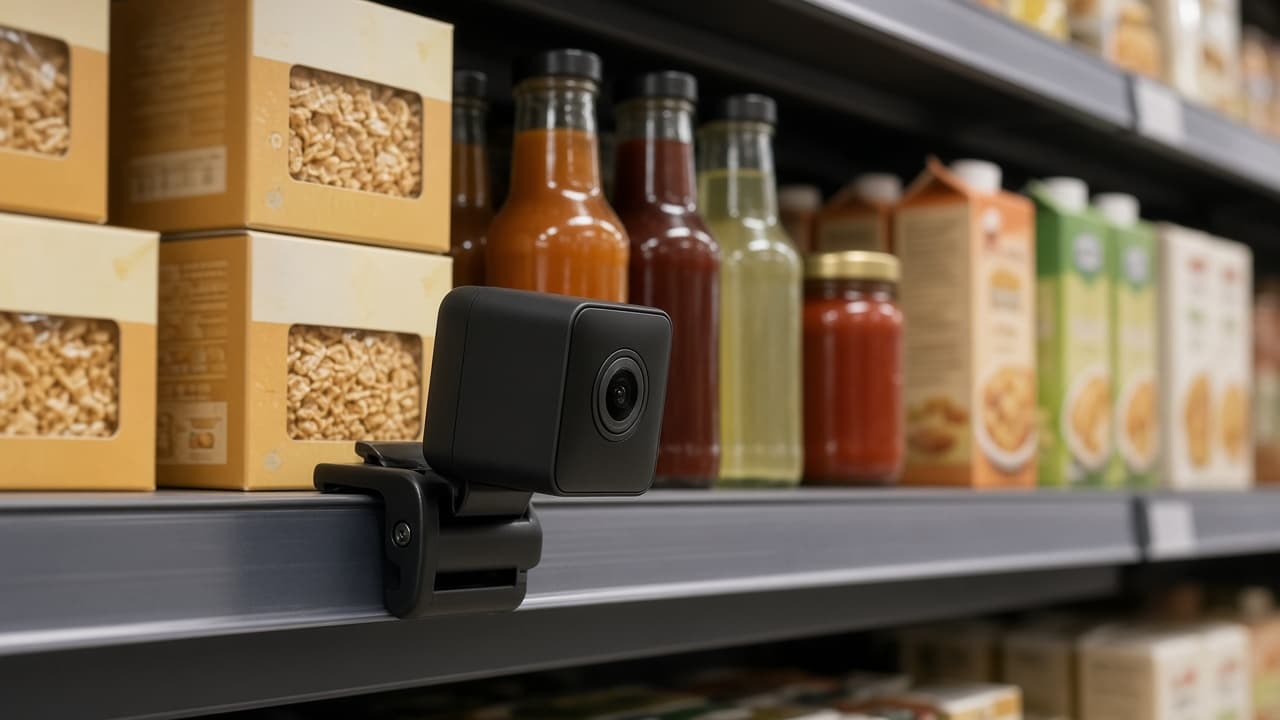
“Digital twin” is one of those phrases that can sound like a trade-show slogan until you stand in a supermarket and ask a simpler question: does anyone have a live picture of what is actually happening on the floor right now—and can that picture turn into a task before the shopper walks away empty-handed?
In early September 2026, that question got a very concrete answer in Shenzhen. Chinese omnichannel retailer Rainbow opened an upgraded Shahe sp@ce supermarket as its first Store Digital Twin–enabled store, developed with Hanshow and Rainbow’s technology partner Lingzhi Digital Technology. Coverage from Retail Technology Innovation Hub, MARKETECH APAC, and related industry reports placed the opening around 4 September 2026 in Nanshan District. The store, which had served the neighborhood for nearly seventeen years, was framed as part of a broader lifestyle upgrade—and as a live laboratory for connecting sensing, decision support, and execution in one retail environment.
Press accounts repeatedly cite more than 17,000 IoT devices in the store. At the shelf edge, Hanshow Nebular Ultra electronic shelf labels are described as supporting centimetre-level product positioning. AI vision and robotics sit alongside those labels. Lingzhi’s retail AI work is credited with forecasting, replenishment strategy, and task management. Smart carts appear on the shopper side as location-aware companions. Put together, the story is not “another screen in the aisle.” It is an attempt to give the physical store a continuously updated digital counterpart.
What a retail digital twin means in plain language
In engineering, a digital twin is a living model of a physical asset: a factory line, a wind turbine, a jet engine. Sensors feed the model; the model helps people predict and act. In retail, the “asset” is the store itself—people, goods, and space—changing every few minutes.
A useful retail twin is not a pretty 3D fly-through for executives. It is a shared state of the floor: where products are supposed to be, where they actually are, what the price says, which facing is empty, which task is open, and whether the last instruction was done. When that state is current, headquarters and the store stop arguing from different photographs of reality. When it is stale, everyone is managing yesterday’s aisle.
Rainbow’s Shahe project, as described in industry coverage, leans on that definition. IoT devices and AI are said to combine real-time sensing, analysis, decision-making, and execution. That last word matters. A twin that only visualizes is a dashboard. A twin that closes the loop is an operating system for the floor.
What electronic shelf labels add
For years, electronic shelf labels were sold mainly as a labor and pricing tool: change thousands of prices from the back office without printing paper tags. That value is real. In a digital-twin context, newer ESL generations are being asked to do more.
Hanshow’s Nebular Ultra labels, according to company and trade coverage, act as spatial anchors—geo-reference points that help map shelves and products at centimetre-level precision. Price is still on the face of the label. Behind that face is location intelligence: which bay, which position, which SKU association. Tap-to-interact features extend the label into a shopper touchpoint for product details, traceability, and promotions. For operations teams, the same edge device becomes part of the store’s coordinate system.
That matters because vision alone often struggles with identity at scale. A camera can see an empty hole. An ESL can insist that this hole belongs to a specific item at a known coordinate. Together they reduce the “we see a gap, but which SKU?” ambiguity that wastes associate time.
What vision and robotics add
Vision answers a different question: what does the shelf look like right now? Planogram compliance, empty facings, misplaced items, and sometimes quality or presentation issues are visual problems. Coverage of the Shahe store describes Hanshow combining ESLs, location intelligence, AI vision, and robotics to support out-of-shelf identification, merchandising management, and shelf execution.
Robotics and mobile devices extend reach into aisles and moments when a fixed sensor is not enough. Smart carts, in the Rainbow–Hanshow narrative, connect the shopper dimension—position, navigation, offers, checkout access—back into the same twin. The educational takeaway is not that every store needs every device. It is that people, goods, and fixtures only become one model when their signals share a common spatial and product language.
Why visibility without action is incomplete
Retail has no shortage of visibility projects that stop at the report. A heat map of empty facings that nobody owns by noon is still an empty facing at dinner. A twin that shows centimetre-accurate positions but never creates a prioritized task is expensive wallpaper.
The sensing → decision → execution loop is the industry phrase for closing that gap. Sensing is the IoT and vision layer. Decision is forecasting, prioritization, and exception handling—what Lingzhi’s role is described as covering in the Rainbow project. Execution is the associate’s list, the robot’s pass, the price update, the replenishment pull. Rainbow executives, in published quotes, stressed faster and more accurate responses so staff can spend more time on service. Hanshow’s Relvin Sun framed the value as operating more effectively and making the shopper experience feel more natural—not more theatrical.
That framing is useful for any retailer evaluating digital-twin language in 2026. Ask three questions. First: what is sensed, and how often? Second: who decides what matters when twenty alerts fire at once? Third: what changes on the floor within the hour because of that decision? If any answer is fuzzy, you do not yet have a twin. You have a collection of connected devices.
What store and chain operators can learn without copying Shenzhen
Not every market will deploy 17,000 devices in a single supermarket. Labor models, privacy norms, fixture density, and capital budgets differ. The transferable lessons are architectural.
Start with a single source of shelf truth that both store and HQ trust. Decide whether price, location, and availability live in separate systems that only reconcile overnight—or in a shared state updated through the day. Treat ESLs as more than price tags if you need spatial ground truth. Treat cameras as more than loss-prevention hardware if you need facing-level reality. And design the associate workflow first: if the best insight still arrives as a PDF, the twin stops at the office door.
Distributors and brand teams watching these projects should notice another shift. When a store’s digital model becomes trustworthy, negotiations about out-of-stocks, display compliance, and promotional execution can move from anecdote to shared evidence. That does not remove commercial tension. It changes the quality of the argument.
How sensing, decision, and execution show up on a Tuesday afternoon
Imagine a promotional endcap that sells through faster than forecast. Sensing notices empty facings and mismatched presentation. Decision ranks the gap against other open tasks and checks whether overhead or backroom units exist. Execution sends a clear restock job to the right associate, or queues a robot pass, and updates the price or promotional content on the ESL if the offer changed. None of those steps is science fiction. What is new in Store Digital Twin projects is the insistence that they share one map of the store rather than living in three vendor portals and a paper clipboard.
Centimetre-level positioning sounds abstract until you consider associate time. Walking to “somewhere in grocery” burns minutes. Walking to a bay coordinate with a confirmed SKU and a known case location turns replenishment into a short path. The same precision helps headquarters audit whether a display was built as planned without flying someone to Shenzhen—or to any other city—for every check.
There are limits worth naming. Dense IoT deployments raise questions about maintenance, battery or power strategy, network reliability, and associate adoption. A twin that is accurate at open and stale by mid-afternoon recreates the old problem with prettier graphics. Privacy and shopper-sensing rules vary by market; operators should separate shelf and fixture sensing from any people-analytics ambitions and follow local norms. And integration debt is real: ESLs, cameras, robots, carts, and ERP systems only form a twin when product master data and location master data agree.
The Shahe sp@ce opening is one high-profile data point in a longer industry move: from digitizing transactions to digitizing the physical floor. ESL, vision, carts, and AI models are pieces. The digital twin is the claim that those pieces can share one live picture—and that the picture is only as valuable as the action it drives before the next shopper turns the corner.
Want this in your stores? Request a pilot.