Blog/Note
The blind spot above the shelf: why top stock is back in the news
Top stock hides inventory above the shelf line. Focal’s Aug 2026 ShopRite pilot put the blind spot back in retail news—here’s what it means.
September 28, 2026
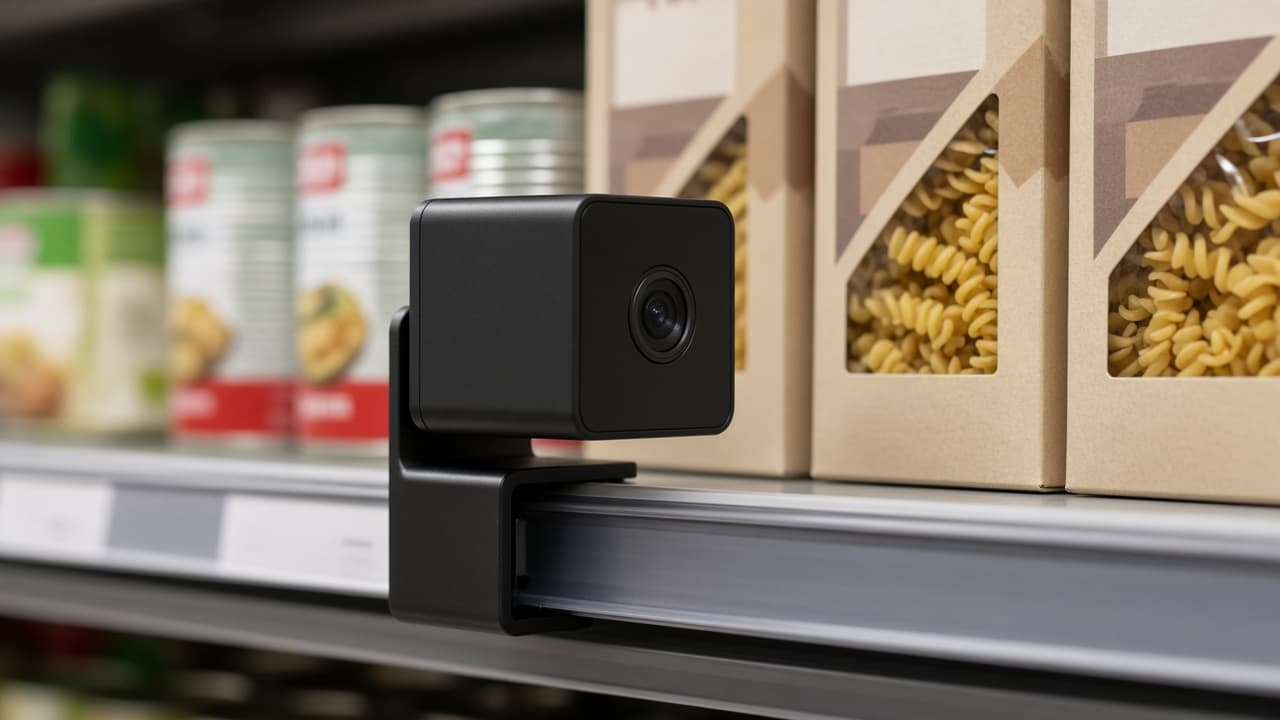
Walk any grocery aisle and your eyes stop at the facing. That is where the shopper decides, where the planogram lives, and where most retail technology has spent the last decade. Above that line sits another layer of inventory: full cases, mixed packs, and overflow that never quite made it into the replenishment workflow. Retailers call it top stock. For years it has been one of the industry’s quietest blind spots.
In early August 2026, that blind spot moved into the news. Focal Systems announced Top Stock, a computer-vision module aimed at the space above the shelf line. Coverage from Business Wire and Retail Technology Innovation Hub described a one-month pilot with Village Super Market, the ShopRite operator. The reported figures were concrete enough to travel: about $24,000 in previously unaccounted inventory identified in the first month; weekly audit labor cut by roughly 75 percent, from four hours to one; about ten hours saved weekly on the night crew; a 36 percent reduction in top stock inventory; and a one-percentage-point on-shelf availability lift on top of an already high, Focal-driven baseline of about 97 percent. Village Super Market, according to the same press, moved toward expanding the approach beyond the pilot store.
Those numbers belong to a single store and a single month, and they should be read that way: attributed pilot results, not industry averages. What makes them useful for operators elsewhere is not the exact dollar figure. It is the shape of the problem they describe.
What top stock actually is
Top stock is inventory that is already inside the four walls of the store but is not sitting in the selling position. In many formats it lives on the upper shelf, on a case rack above the gondola, or on a mezzanine-style ledge that associates reach with a ladder or a step stool. The product has usually been received, scanned into the system, and parked where it is convenient for night crew or for whoever last broke down a pallet.
From a shopper’s point of view, top stock does not exist. From an ERP’s point of view, it often looks like perfectly good on-hand inventory. From a replenishment associate’s point of view, it is visible only if someone remembers it is there, climbs up, and matches the case to an empty facing below. That gap between “in the building” and “on the shelf where demand happens” is where lost sales and phantom availability grow.
Why ladders and manual audits keep failing
Manual top-stock audits fail for structural reasons, not because store teams are careless. Climbing is slow, awkward, and sometimes unsafe. Night crews already carry receiving, resets, and deep cleans. Day crews are measured on front-facing work and customer service. A weekly or biweekly ladder walk cannot keep pace with how fast high-velocity items move from case to shelf to basket.
Even when an associate does climb, the information they collect is perishable. A handwritten note or a handheld scan taken at 2 a.m. may be stale by the lunch rush. Location memory is fragile: the same SKU can sit above a neighboring bay after a reset. Mixed cases and unlabeled overflow make the job harder. And because audits are labor-expensive, stores ration them. The result is a familiar pattern: inventory systems say the store has stock, the facing is empty, and the case that would have fixed it is three bays away and six feet up.
Press coverage of the Focal module emphasized another practical detail. The system, as described, is meant to trigger replenishment when a full case can fit on the shelf, rather than forcing associates to break cases prematurely. That sounds like a small workflow rule. In a busy grocery store it is the difference between a clean restock and a half hour of cardboard, knives, and interrupted shoppers.
How vision of above-shelf cases feeds replenishment
The industry idea behind above-shelf vision is straightforward. Cameras already pointed at the aisle can also see the upper zone. Labels or markers on cases make product identity and quantity readable. Those reads feed the same action layer that already ranks empty facings and planogram gaps. Instead of hoping someone remembers what sits overhead, the store gets a recurring signal: this facing is empty, and the case that fills it is here.
In the Village Super Market pilot, as reported by Business Wire and Retail Technology Innovation Hub, that loop was credited with recovering stranded inventory, shrinking the overhead pile, and freeing night-crew hours. Senior VP Bob Belsky was quoted saying the first surprise was how much inventory sat above the shelf outside the replenishment workflow—and that finding roughly $24,000 unaccounted in month one made the problem impossible to ignore. Labor savings, he said, made continuing an easy decision.
None of that requires believing that every store will get the same return. Format, category mix, how aggressively a chain uses overhead storage, and how disciplined receiving already is will all change the outcome. The educational point is simpler: top stock is not “extra storage.” It is inventory that competes with backroom stock for attention and usually loses, because backrooms have processes and top stock often has only a ladder.
Why the story is back now
Retail technology has spent years on the selling face: empty-facing detection, planogram compliance, electronic shelf labels, and on-shelf availability scores. Those investments matter. They also make the overhead gap more visible. Once a store can see that the lower shelf is empty in near real time, the next question is unavoidable: if the system says we have inventory, where is it?
Top stock is one of the answers. Backroom mis-slots are another. Phantom inventory from theft, damage, or receiving errors is a third. Operators who treat OSA as a single number often miss that the causes sit in different physical layers of the store. Fixing only the facing without asking about the case above it is like treating a symptom while the refill sits out of reach.
There is also a working-capital angle. Inventory parked overhead still ties up cash. If cases accumulate because no one trusts the count or because replenishment never gets a clean task, the store pays twice: once for the product, and again for the empty facing that loses the sale. Press around the ShopRite pilot framed the $24,000 recovery as inventory that was already paid for and sitting in the building—just not in the workflow. Whether a given store recovers thousands or hundreds, the mechanism is the same.
What store managers and distributors should take from the news
If you manage a store, the practical checklist is less about any one vendor and more about process honesty. Map where top stock actually lives in your format. Ask how often anyone audits it, and how that audit becomes a restock task rather than a clipboard exercise. Separate “on hand in the building” from “available to the facing without a climb.” Watch whether night crew is building overhead piles faster than day crew can pull them down. And when OSA dips, check whether the missing units are truly out of the building or merely out of the shopper’s line of sight.
Distributors and supplier teams who walk stores for orders face a related trap. An empty facing with a case sitting above it is not a true out-of-stock signal to the warehouse. Ordering more can worsen overcrowding upstairs while the real failure was execution on the aisle. Better visibility of overhead inventory helps both sides argue from the same picture: what is sellable now, what is stranded, and what truly needs to ship.
The August 2026 announcements did not invent top stock. They put a name and a set of attributed results on a problem every grocery operator already knows exists. Ladders will not scale with labor scarcity. Manual audits will not match the cadence of modern shelf visibility. Connecting what sits above the shelf to what is empty below it is becoming part of how the industry talks about on-shelf availability—and that conversation is only getting louder.
Want this in your stores? Request a pilot.